
The Amateur as Method
A Presentation of Dilettantism
by Sergio Armaroli
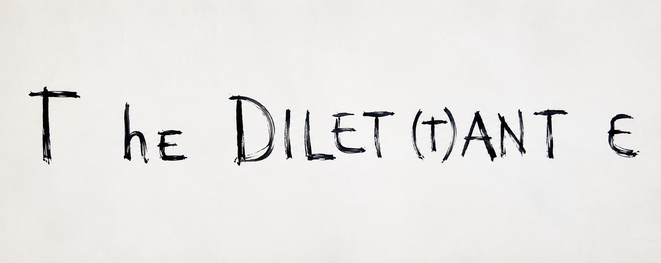
The word dilettante derives from the Italian dilettare—to delight. Before becoming a pejorative label for incompetence, the amateur was someone who acted out of love rather than profession, curiosity rather than specialization, necessity rather than career. To be a dilettante was not to know less, but to know differently.
AI-Generated Image
Today, when artistic practice is increasingly measured by professional credentials, institutional recognition, productivity, and market value, the figure of the amateur re-emerges as a critical position. Dilettantism is not the absence of rigor; it is the refusal to reduce knowledge to expertise alone.
This understanding finds an unexpected ally in Wolfgang Müller's concept of the Geniale Dilletanten (deliberately misspelled). Emerging from the experimental culture of West Berlin in the early 1980s, the "genius amateurs" rejected virtuosity, professionalism, and the mythology of technical perfection. They embraced improvisation, DIY practices, interdisciplinary experimentation, and the freedom to create without asking permission. Their mistake in spelling became a declaration: error itself could become method.
These two traditions—one philosophical and historical, the other radical and subcultural—share a common conviction: creation begins where expertise ceases to be an authority.
The amateur is not the opposite of the artist.
The amateur is the condition that allows the artist to remain alive.
To remain an amateur means preserving the capacity for surprise, for failure, for beginning again. It means refusing the closure of identity. Every discipline becomes provisional; every language can be learned; every mistake becomes a form of research.
Within the Erratum Artist framework, dilettantism is understood as an epistemology rather than a social status. The Erratum Artist is an amateur by choice—not because they lack competence, but because they refuse to let competence become confinement. They move between art, writing, music, publishing, philosophy, archives, performance, technology, and everyday life without accepting disciplinary borders as natural.
The amateur does not accumulate certainty.
The amateur accumulates possibilities.
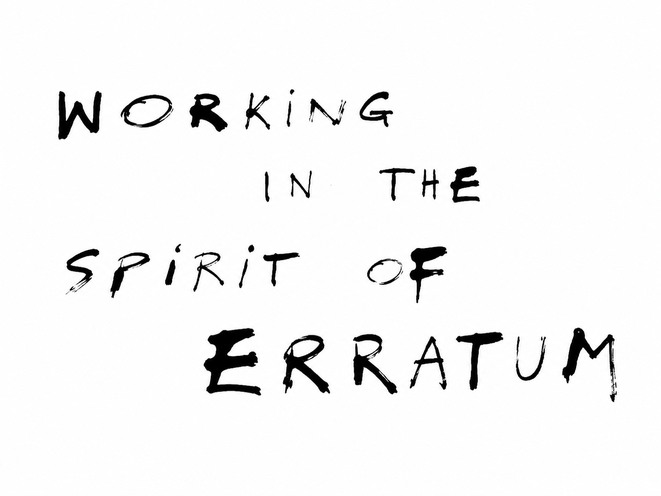
In this sense, the amateur transforms the error (erratum) into a creative principle. Every correction reveals another path; every unfinished work remains open to revision; every field of knowledge is approached with curiosity rather than ownership.
Against the ideology of specialization, the Erratum Artist practices radical openness.
Against virtuosity, they choose attention.
Against expertise as identity, they cultivate learning.
Against the finished work, they privilege the living process.
To be a dilettante today is therefore not to remain outside culture, but to resist becoming fully absorbed by its systems of validation. It is to defend the freedom to cross disciplines, to remain intellectually mobile, and to rediscover creation as an act of pleasure, research, and continuous transformation.
AI-Generated Image
Nota: In Artist and Amateur: Creative Typologies between Romanticism and the Twentieth Century, Sergio Armaroli proposes the artist and the amateur not as opposing categories but as a productive dialectic. The artist tends toward the objectification of the work, while the amateur embodies a way of living, a desire to know, and a search for what Armaroli calls the unity of experience. The amateur resists the division of labor that fragments human existence into isolated competencies. Rather than mastering a discipline, the amateur inhabits experience as a whole, where art and life remain inseparable.